

Is Conservatism Cool Yet?
Checking back in

This article was written in partnership with Ben Grinspan, a brand and cultural strategy expert who knows way more about political things than I do :)
OG subscribers may remember the article I published last winter, in which I examined whether all the buzzy headlines around conservatism’s recent cultural resurgence were warranted. I predicted the hype would be short-lived, given the right’s inability to produce anything of real, tangible cultural value beyond the political realm.
A lot has happened since then. Let’s check back in.


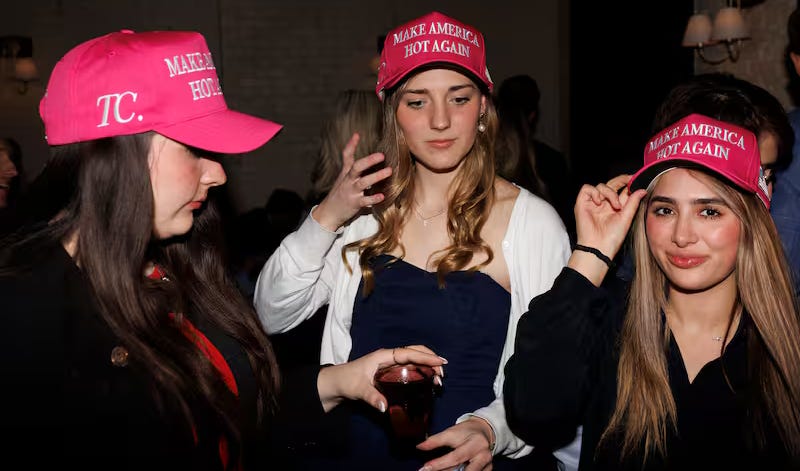
A year ago, it seemed like the right was on the verge of capturing a new dominance in American culture that it hadn’t experienced in decades. They had made what felt like real progress, from podcasters like Joe Rogan and Theo Von dominating election-cycle content, to professional athletes doing the T***p dance after scoring a touchdown or goal. Thin, Shein-clad blonde women proudly declared that we needed to “Make America Hot Again!” It appeared that the dogmatic, uptight moralism of the left had been replaced with a cooler, freer and more hedonistic ethos. There was something socially taboo and subversive about the movement, a key ingredient in breeding countercultural coolness.
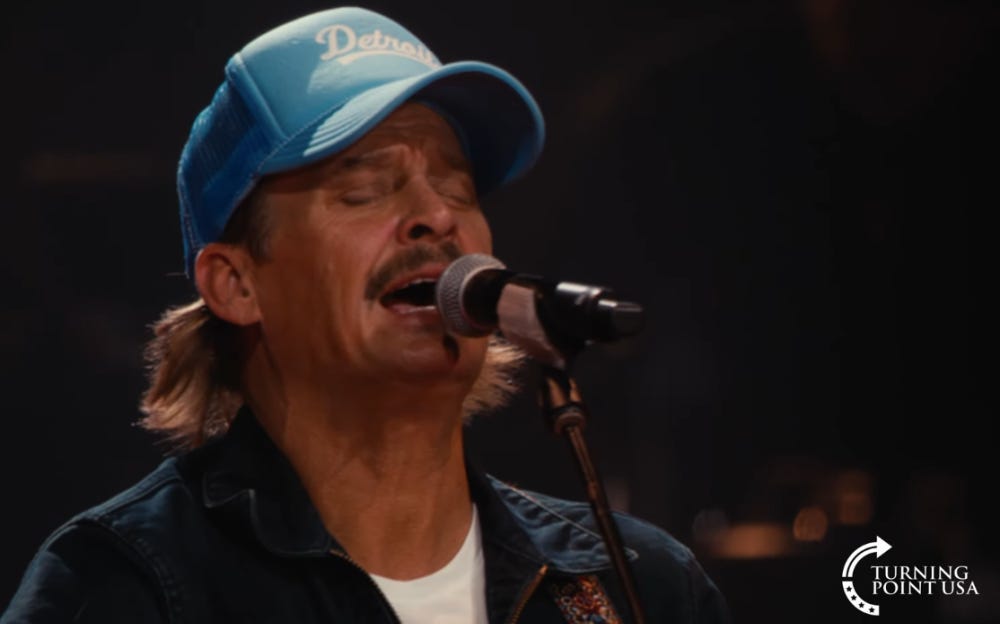
Now, it seems, the pendulum has swung back. They’re pretending to like Kid Rock, while the rest of the country gets to enjoy the real Super Bowl halftime show. Is MAGA in its cringe era? The Washington Post asked just this week. The cultural evolution (or, devolution) has been somewhat predictable. One might argue that conservatism’s profound moral failings and the chaos that is our current Presidency are what have weakened its cultural dominance over the last year. And while that may be part of it, I don’t think it’s actually that political at all.
Last year, I wrote that “conservatives claim cultural supremacy but produce nothing of real cultural value.” And that assertion seems to have held true. The Turning Point USA show (which garnered as many as 6.1M concurrent viewers to Bad Bunny’s record-breaking 4.16B) is a prime example, drawing ire even from conservative stalwarts like Nick Fuentes who quite poignantly remarked that “if that’s the best we have to offer, honestly I’m switching sides.”
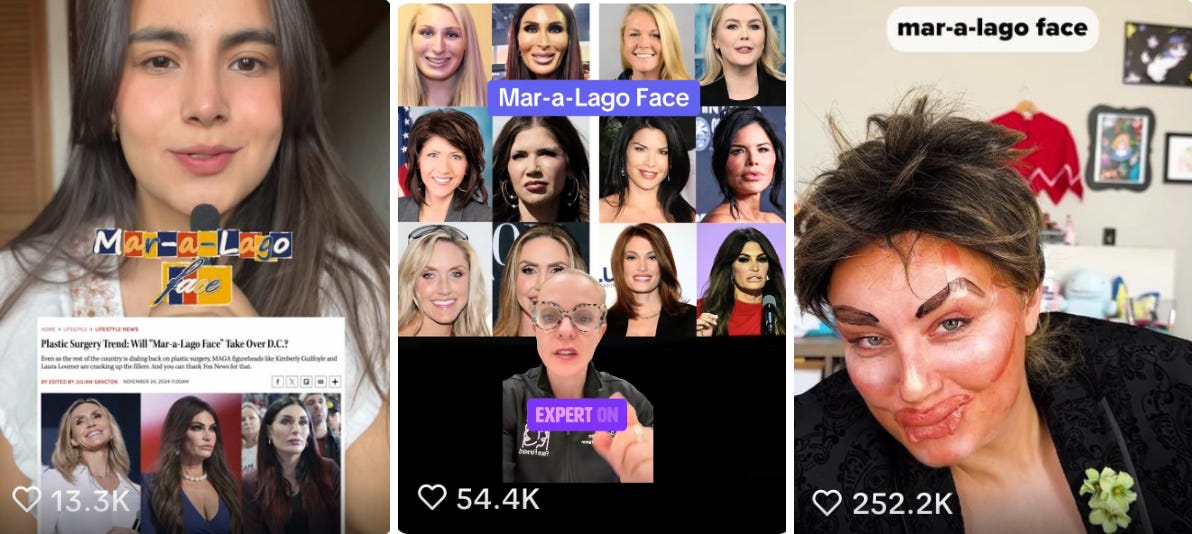
If this really has become the “dominant” culture over the last two years, where is all the right-wing art? The groundbreaking film? The era-defining music? The influence on the beauty industry beyond “Republican clown makeup” or “Mar-A-Lago face”? It’s not that they produced nothing—there’s plenty of evidence of MAGA’s impact on culture (incel lingo like looksmaxxing even got a mention during Conan’s Oscars speech this year). It’s that what they produced was incredibly myopic.
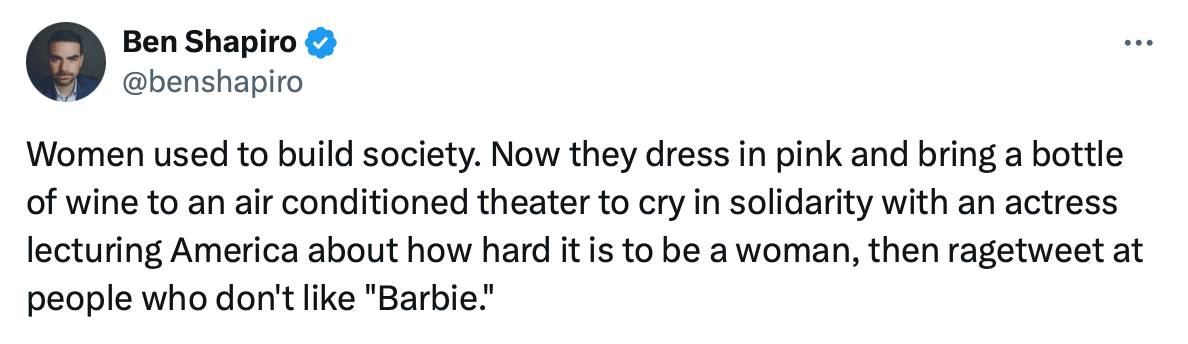
What do conservative movements like the manosphere have to offer women? Queer people? Progressives? Men who don’t hate themselves? A culture that subjugates more than half the population is not set up for success. If you cannot stand, let alone make, a Barbie movie because you hate women, you’ll never have your own Barbenheimer-type mass-cultural moment. Heated Rivalry (despite being produced in Canada) has resulted in such a collective psychosis in American culture because it meant something to so many people—the girls, the gays, even straight men found its vulnerable expressions of masculinity to be moving. What would a conservative, MAGA-fied Heated Rivalry even be? It’s an oxymoron. Or a MAHA-fied version of The Pitt? Hilarious as an SNL sketch, but self-defeating in its theoretical execution.

NYMag’s recently profiled “The Women Leaving the New Right,” who joined the conservative movement but found nothing more than toxic men looking for compliant mouthpieces to parrot their misogynistic rhetoric. No real culture or community existed for anyone outside the sphere of straight white men. “This is embarrassing to admit, but I think I fell in with the right wing as an aesthetic choice initially,” says one recent defector, Anna. But a political movement that promises, first and foremost, to extinguish the spark in half the population, she says, is not built to last.
Ultimately, the cool right never figured out how to leverage their newfound political relevance to expand their cultural influence. Socioeconomic frustrations or aesthetic appeal may have made them circumstantially compelling, but the platform they were afforded was not utilized to move culture forward in any way.
A large part of this is because right-wing culture has become inherently reactionary; it tears down others while producing very little new. “We treat American culture like a giant oppo dossier,” said Natalie Winters, right-wing political commentator and co-host of The War Room podcast. “We’re good at attacking culture, not at creating our own.” And as any good brand knows, cultural relevance has to be deliberately cultivated—it isn’t guaranteed by destiny or mere circumstance. If the best the right can manage is to reheat Kid Rock’s nachos, then calling them “cool” is indeed a stretch—meaning that their influence was always isolated to politics rather than permeating the zeitgeist as a whole.
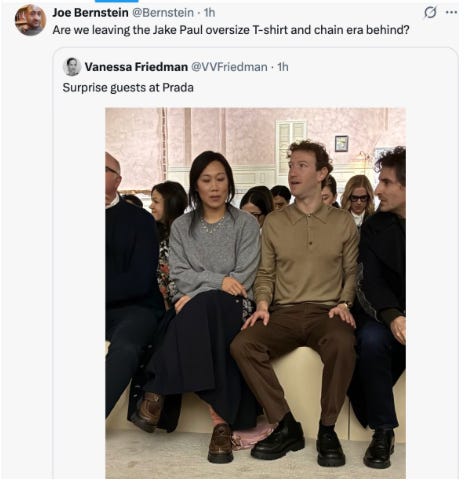
Perhaps many of these people, including those young hot conservatives profiled in the infamous NY Mag Cruel Kids Table article last year, were just along for the ride. Happy to align themselves with whatever cultural movement seemed to be popular or trendy at the time. Take for example Mark Zuckerberg’s abrupt shift back to a more understated look after his tech-douche bro-fit era—a random moment like the metaverse he was more than happy to dispose of when it didn’t catch on. The Cut’s feature on Evie Magazine’s fashion week party also highlights this in how shockingly few of the events’ attendees were actually aware of the magazine or even aligned with its conservative values (many, it seemed, found out about the party through Neon Coat, an app that alerts models and influencers of nearby events). Such flip-flopping flimsiness suggests that many in right-wing circles were never really that deeply entrenched in the movement to begin with—satisfied to perform the aesthetics of conservatism with little regard for its underlying values.
All of this reinforces the pattern: that while right-wing culture may have gained attention momentarily, without true depth or inclusivity, its impact will always be surface level. Not that broader culture is doing much better—trends burn hot and disappear overnight, TV & film are filled with IP recycling and uninspired reboots, and a flattened media landscape has made lasting cultural impact increasingly rare. But stagnation alone doesn’t explain the gap—the right’s culture isn’t just fleeting, it’s fundamentally constrained by who it excludes.
Conservatism’s most recent golden era, it seems, might be headed the way of the high school mean girl: briefly on top, then washed up and knocked up within a year of graduation, forever posting cloying throwback photos on Facebook while the rest of us wonder why we ever let them make us feel so shitty about ourselves in the first place.
I think the claim that conservatives have produced “nothing of cultural value” only works if you define culture very narrowly… basically as Hollywood, prestige TV, and legacy media.
And yes, in those spaces, conservatives don’t dominate. They never have, and likely never will.
But that doesn’t mean they haven’t produced culture
Conservatives were early and dominant in podcasting and direct-to-audience media.
They also played a major role in early internet and meme culture, long before it became mainstream.
love it or hate it country is one of the most commercially dominant genres right now, and it reflects a largely conservative cultural base.
I think you hit the nail on the head with the point about right wing culture being mainly critiques of mainstream culture. Now that we are living in an era of conservative dominance from the podcast and news sphere to Silicon Valley to the White House, what is there to complain about anymore?