

The curse of knowing yourself too well
You might be overthinking it

I’ve been struggling with my anxiety these past few weeks and have tried every mental health hack under the sun, to little avail. Journaling, therapy, medication, meditation, breathwork, yoga — you name it, I’ve tried it.
At the tail end of a particularly bad panic episode, I thought to myself — am I just making things worse? Did my hyperfixation on understanding myself, my own mind and my anxiety disorder just drag me further away from what I really wanted — which was to feel at peace? Maybe there was nothing to get to the bottom of. Maybe it was just me all along.
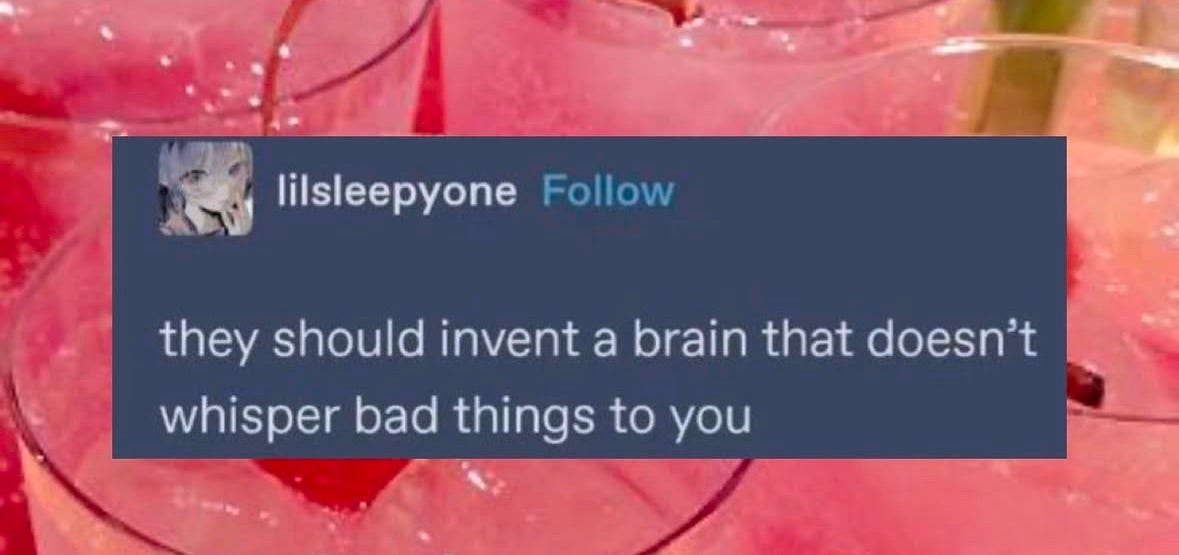
In the eternal human quest to know oneself, it’s tempting to seize every bit of information available to us. And today, we easily can. We have the luxury of unlimited access to all the information we could ever want online. So it feels like a missed opportunity to not take full advantage. To learn not just about the world, but ourselves and our role in it.

What started as innocuous Buzzfeed quizzes about “what kind of breakfast food are you” has morphed into an entire content landscape filled with creators trying to help us learn more about ourselves. We conduct color analysis to identify the best palette for our wardrobe, find the right makeup for our face shape and categorize our body according to the Kibbe Typing system. We tweak and edit and improve as we go, furtively gathering a never-ending supply of knowledge as we slowly try to build ourselves into an omniscient God.
It’s fun, sure, and feeds into our cultural obsession with constant self-optimization. You can’t abstain, just like you can’t resist buying the latest viral lip stain. How could you miss out — not just on a product, but on knowing yourself better? While on the surface level you will find an obsession with aesthetics and curated appearances, discovering yourself online goes much deeper than that. Therapy-speak has permeated our cultural lexicon, as we adopt terminology typically reserved for clinically trained psychologists to explain what in the world could be wrong with us (a lot, apparently).
When it comes to romance and relationships, there’s a treasure trove of information available online to diagnose your interpersonal problems. You can get to the bottom of what your romantic attachment style is, unpack how your childhood trauma impacts your relationships, and figure out what your love language says about you. We make dating decisions based on our perceived astrological compatibility and are quick to dismiss a potential suitor if they trigger one of our many carefully defined boundaries or icks.
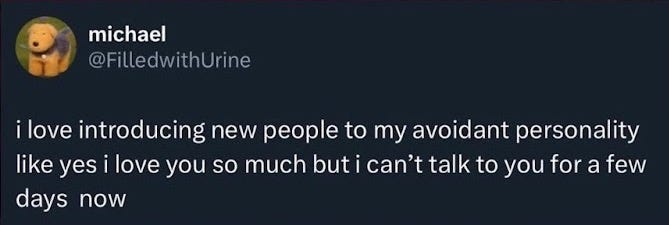
Experiencing career anxiety? You need to take this quiz to determine whether you’re in the wrong career for your personality type. Then, uncover whether your workaholic tendency might be a trauma response. Or, it might be because you’re a dismissive avoidant. Maybe both. Problems with coworkers? Personality frameworks like Enneagram and Myers-Briggs can help you diagnose and solve those festering work conflicts. If you’re feeling like you need a break from your job or life in general, you might be having a quarter-life crisis. Because a mid-life crisis wasn’t enough — we needed to come up with a new phenomenon to categorize our existential dread with greater frequency.
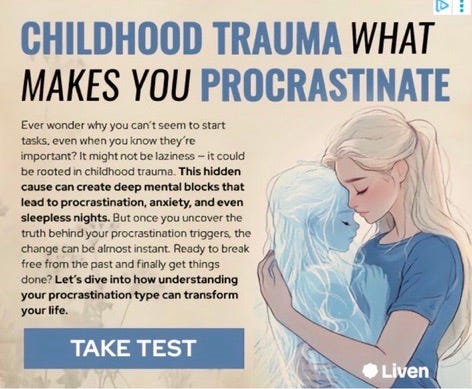
This self-knowing extends to more serious mental health challenges. In what is becoming a growing issue online, young people are self-diagnosing mental health disorders — trying to explain away their social awkwardness or inability to focus with claims of autism, OCD, Tourette’s, or even dissociative identity disorder. In many ways, having a mental illness has become fetishized — something to be proudly displayed in a social media bio — raising concerns around rampant misdiagnoses that threaten to ostracize and delegitimize those who suffer more acutely from real mental illness.
With all this self-help / self-work / self-obsession, there’s an entire industry that stands to profit from our incessant desire to know ourselves better. Meditation apps, life coaches, wellness retreats, biometric devices, manifestation courses, and inner-child workshops — all promising to bring us closer to some elusive “best self.” As a result, this quest for knowledge often comes up shallow, rooted in consumerism rather than authentic self-discovery.
What good has “knowing ourselves” done?
You’d think it would help. And yet people—especially women—generally only continue to become more depressed and anxious. The internet allows us to know everything, but the more we learn it seems, the less we know. Facing a growing mountain of content to consider, we feel simultaneously overwhelmed and under-informed.
The New York Times recently asked “Is All of This Self-Monitoring Making Us Paranoid?” detailing how as technology like the Oura Ring has become ubiquitous, many people are saying that having so much intimate knowledge about their bodies is actually making them more anxious. Rather than feel empowered and in control, the data only makes them fixate on potential — and often nonexistent — problems.
Why are we doing this?
There is a pervasive and consistent self-consciousness born from being chronically online, a trend I’ve written about recently. A lot of this labeling and the online therapy discourse are often obscuring a semi-pathological self-absorption. Particularly in a country where basic mental-health care remains a luxury commodity, it’s no surprise that those fluent in therapyspeak tend to be wealthy and white.

But I think most importantly, we lack the traditional methods by which we used to define ourselves — the neat boxes previous generations once used (wife/husband, parent, homeowner) are less accessible and in many cases, no longer appealing. Many are feeling deeply, existentially disoriented. The death of community, too, stands to impact how we define ourselves. We do not build our identity in a vacuum — our self-knowing comes from knowing and connecting with others too. Once upon a time we had rich subcultures: punks and goths, hippies and emos. Now, we have shallow surface-level TikTok aesthetics and cores that come and go like the wind.
So, we desperately search for any kind of anchor. Something concrete to build our identity around. It seems in many cases, we’re building that identity around being mentally ill. According to a 2024 survey, 72 percent of Gen-Z girls said that “mental health challenges are an important part of my identity.” Recently, social psychologists have begun studying this “mental illness identity.” Believing that mental health challenges are a critical facet of one’s self-identity can actually be a form of “self-stigmatization” which can reduce self-esteem and limit people’s ability to cope with life’s difficulties.
The problem is that we think that this brutal knowing of ourselves will be freeing.
Unfortunately, the overlabeling that stems from pop-culture psychology can often flatten and oversimplify incredibly nuanced subjects. There are a lot of reasons why we are the way that we are, and it can be unhelpful to compartmentalize ourselves through a self-diagnosis that puts us into a box. Of course, if you are genuinely struggling with your mental health, a diagnosis from a licensed healthcare professional can provide an incredible amount of clarity. But sometimes life is hard and it’s not just because we have an anxious attachment style, or a dependent personality, or a myriad of disorders we have self-diagnosed on TikTok. Maybe you don’t have social anxiety — maybe you just grew up in a tech-dependent society and spent your formative years behind a screen rather than building in-person social skills. Maybe you don’t have a panic disorder — maybe you feel the immense pressure to perform at work and a lack of social safety net should you fail.
To be human is to be flawed. It’s messy and unexplainable. This knowledge that we seek to empower ourselves with only obscures our vision of who we truly are — multifaceted, complicated, enigmatic, and hopelessly fucked up. But maybe, we were never that fucked up to begin with. Maybe we were just human beings all along. “We’re so determined to de-stigmatise mental health issues we’ve started to stigmatise being human,” writes Freya India for GIRLS .
That leads us down a road of hating ourselves more while feeling like we know ourselves even less. When you’ve labeled yourself into submission, and things inevitably still suck…then what? Is it just another personal failure? The reality is that there is no criticizing your way to confidence. Pinpointing all the ways you are inherently broken is not going to get you anywhere. If we constantly seek out ways to improve ourselves, we’re destined to a Sisyphean journey of isolating self-work.
The natural outcome of all this self-reflection and optimization? An existence that is hyper-productive, efficient to a fault, yet profoundly alone. We effectively become trapped in our own minds. As India continues in her article “It’s heartbreaking to see how many young women are so miserably stuck in their own heads now, and encouraged to go further and further inwards to find relief.” There is a life outside being missed as we continually try to work on ourselves. A life we promise ourselves we’ll get to once we resolve our emotional trauma, complete our shadow journaling, or soothe our social anxiety. Roughly 1 in 4 (24%) of Gen Z adults identified their mental wellness as the most important input when considering a night out, which surpassed “having fun” at 17%.
The irony is that going out, getting out, might be exactly what we need. Unfortunately, we’re a generation that often finds the meaning of life not from the outside world, but inside our heads. We greatly underestimate this miserable business of knowing ourselves. It’s time to get out of our inner worlds and into the real one. To prioritize real wisdom over accruing endless hordes of knowledge. To be okay with the fact that we’re nuanced human beings and not everything can be so easily defined. Until then, we will always see ourselves as a problem to fix.
Well put Molly. Labels are fleeting as everything changes. We give ourselves too much self importance and assume things are static. After food, water and shelter it’s all superfluous. The joy of life comes through experience not through intense self reflection. It’s better to be open to new ideas and try new things than build definitions that limit ourselves.
So when’s your philosophy roundtable?
loved this! ive been thinking about this a lot lately, how shifting focus into that "self-care" or "self-discovery" journey is just a clever way to isolate ourselves so we do not have to deal with the complexity and nuance of human interaction and connection. and that is to do a huge disservice to ourselves. thank you for sharing this, was a joy to read!